HealFern may earn a commission if you buy through links on this page, at no extra cost to you. That does not change what we report.
Part of our Red Boost overview. Last checked October 27, 2026.
Red Boost side effects have not been studied for the product itself, so the known risks come from its five ingredients: mainly stomach upset, allergic reactions and possible clashes with heart and erection medicines.
The vendor's contact FAQ says "There are no reported side effects"[2], but it offers no safety data. When we searched FDA's adverse event database (CAERS) on October 27, 2026, it returned no reports naming Red Boost[3]. An empty database is not proof of safety.
Is Red Boost safe? Safety at a glance
For most healthy adults the doses are modest, but the biggest caution is medicine: two ingredients act on the same blood flow pathway as ED pills, nitrates and blood pressure drugs. Anyone taking those should ask a doctor or pharmacist first.
The second caution is unknowns. The label gives no extract strengths, and the manufacturing facility is not named; the vendor says only that it is "FDA registered", which is not approval[2].
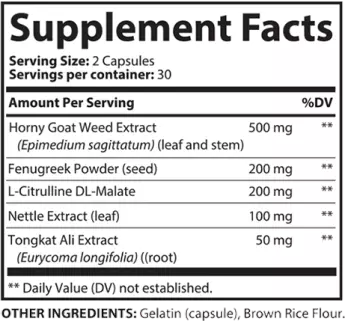
Third, the label and FAQ disagree. The FAQ calls Red Boost vegetarian with "no animal products"[2], but the label lists a gelatin capsule[1]. If you avoid animal products, this matters.
An openFDA recall search found no Red Boost recalls on October 27, 2026[4]. FDA's warning letters and tainted sexual enhancement list did not load for us, so those were NOT checked.
What side effects are possible?
Expect mild effects first, mostly digestive, with rarer allergy and drug-related problems. None of these was measured for Red Boost; they come from each ingredient's research.
Digestive
NCCIH, part of the NIH, lists diarrhea and nausea for fenugreek. Citrulline was well tolerated in trials, with stomach upset reported at high doses, far above the 200 mg of citrulline malate here. The 24-man citrulline erection trial reported no adverse events[5].
Sensitivity and allergy
NCCIH says fenugreek "can cause allergic reactions, including serious reactions." Horny goat weed contains plant estrogens, a concern for hormone-sensitive conditions.
Medication-related
Horny goat weed shows weak PDE5-blocking action in lab work, and citrulline raises nitric oxide. Both could add to the blood-pressure-lowering effect of ED pills, nitrates and blood pressure medicine. Large fenugreek doses may also cause "a harmful drop in blood sugar", per NCCIH.
Which ingredients deserve extra attention?
Horny goat weed and tongkat ali carry the least-studied risks, and citrulline the clearest medicine overlap. Here is each ingredient's main issue from our evidence files.
| Ingredient (label dose) | Safety issue | Why it matters |
|---|---|---|
| Horny goat weed extract, 500 mg | Liver injury signal for one Epimedium species in lab work[6]; thin long-term human data | Largest dose in the capsule; strength not stated |
| Fenugreek seed, 200 mg | Diarrhea, nausea, allergy; low blood sugar at large doses (NCCIH) | Matters for people on diabetes medicine |
| L-citrulline DL-malate, 200 mg | Raises nitric oxide; small BP drops at 3 to 9 g a day[7] | Theoretical add-on effect with BP and ED drugs |
| Nettle leaf extract, 100 mg | Not sourced for leaf; low risk reported for root[8] | Our file covers root, not the leaf on the label |
| Tongkat ali root extract, 50 mg | 26 of 100 Malaysian products tested above the mercury limit[9] | Red Boost publishes no heavy-metal test |
Doses from the vendor label[1]. For what each ingredient is meant to do, see Red Boost ingredients.
Which medicines could interact?
Take this list to a pharmacist before starting. These are theoretical interactions based on how the ingredients act, not results from Red Boost studies.
- PDE5 inhibitors (ED pills): horny goat weed and citrulline act on the same pathway, so effects may add up.
- Nitrate heart medicines: same concern, with a risk of low blood pressure.
- Blood pressure medicines: citrulline converts to arginine and raises nitric oxide, which may add to their effect.
- Diabetes medicines: NCCIH warns large fenugreek doses may drop blood sugar.
- Hormone-related therapy: horny goat weed has plant estrogens, and tongkat ali is sold to raise testosterone. Men with prostate cancer should ask their oncologist; that is our caution, not a sourced warning.
- Any regular medicine: NCCIH advises talking to a provider before using fenugreek with any medicine.
Pregnancy, breastfeeding and who should ask a doctor first
Red Boost is sold to men, but anyone in these groups should get medical advice before taking it:
- pregnant people: NCCIH says fenugreek is "not safe for use during pregnancy in amounts greater than those found in food"
- people who are breastfeeding, since no safety data exists for this formula
- anyone taking ED pills, nitrates or blood pressure medicine
- people with diabetes or on blood sugar medicine
- anyone with liver disease, given the horny goat weed liver signal
- men with prostate cancer or other hormone-sensitive conditions
- vegetarians and vegans, because of the gelatin capsule
- people with known food or plant allergies, since fenugreek can trigger serious allergic reactions
Which symptoms need a doctor right away?
Stop Red Boost and get medical help quickly if a symptom is severe or sudden. See a doctor right away if you have:
- swelling of the lips, face or throat, hives or trouble breathing
- chest pain, fainting or a racing heartbeat
- severe dizziness, especially with ED pills, nitrates or blood pressure medicine
- an erection that is painful or will not go down
- yellow skin or eyes, dark urine or pain in the upper right belly
- shakiness, sweating or confusion if you take blood sugar medicine
Milder stomach upset that does not settle within a few days is also worth a call to your doctor.
Safety conclusion
Red Boost uses modest, fully listed doses, which lowers the chance of strong side effects for healthy adults. The real risk is medicine overlap, plus unknowns about extract strength and the unnamed facility.
If you take heart, blood pressure, ED or diabetes medicine, ask first. If you try it, start on one bottle and follow our Red Boost dosage guide. For whether it is worth the risk at all, see does Red Boost work and our Red Boost complaints page.
Back to the Red Boost overview.
Frequently asked questions
Does Red Boost have side effects?
No side effects have been studied for Red Boost itself. Its ingredients can cause diarrhea, nausea or allergy, and two of them may add to ED pills, nitrates and blood pressure drugs. The vendor's claim of no reported side effects comes without safety data.
Can I take Red Boost with Viagra or Cialis?
Ask your doctor first. Horny goat weed shows weak PDE5-blocking action in lab work and citrulline raises nitric oxide, so both could add to these drugs and lower blood pressure. No study has tested the combination.
Is Red Boost bad for your liver?
There is no liver data on Red Boost. Lab work found a liver injury signal for one Epimedium species, and horny goat weed is the largest dose at 500 mg. People with liver disease should ask a doctor before taking it.
Can Red Boost raise blood pressure?
We found no data showing that. Citrulline tends to lower blood pressure slightly at 3 to 9 grams a day, far above Red Boost's dose. The concern runs the other way: added lowering when combined with blood pressure or ED medicine.
Has the FDA received complaints about Red Boost?
FDA's adverse event database returned no reports naming Red Boost on October 27, 2026, and openFDA showed no recalls. FDA warning letters and the tainted sexual enhancement list did not load for us, so those were not checked.
Sources
- Red Boost Supplement Facts label image. Red Boost vendor, read October 27, 2026.
- Contact and FAQ page. Red Boost vendor, read October 27, 2026.
- openFDA CAERS adverse event search for Red Boost. U.S. Food and Drug Administration, read October 27, 2026.
- openFDA food enforcement (recall) search for Red Boost. U.S. Food and Drug Administration, read October 27, 2026.
- Cormio et al. 2011: oral L-citrulline and erection hardness. PubMed, read October 19, 2026.
- Epimedium koreanum and liver injury, mechanistic study. PubMed, read October 19, 2026.
- Meta-analysis of L-citrulline and blood pressure. PubMed, read October 19, 2026.
- Chrubasik et al. 2007: nettle root research summary. PubMed, read October 2, 2026.
- Mercury in 100 Malaysian tongkat ali products. PubMed, read October 2, 2026.
This page is general information, not medical advice. Dietary supplements are not reviewed by the FDA for safety or effectiveness before they are sold and are not intended to diagnose, treat, cure or prevent any disease. Talk to your doctor before taking any supplement, especially if you are pregnant, nursing, take medication or have a health condition.